
Why AI’s ‘Context Window’ Changes Everything in Marking Season


In Short:
Most AI tools can only “read” the equivalent of a few essays at a time.
Premium versions with larger reading capacity exist, but they still require teachers to juggle file sizes and prompts.
Once that limit is sidestepped, AI can run high-quality analytics that uncover growth trends, augment learning gaps, identify recurring misconceptions, and give teachers a data-rich map of what to focus on next.

The semester is nearly over. Your Year 10 History class had written four essays this term, which is over 100,000 words in total. Wouldn’t it be nice if the end-of-term audit didn’t have to rely on spot checks, and if an AI could analyse the entire corpus to identify learning trends and recurring misconceptions, so you could generate revision notes and quizzes that are tailored to your class’s needs?
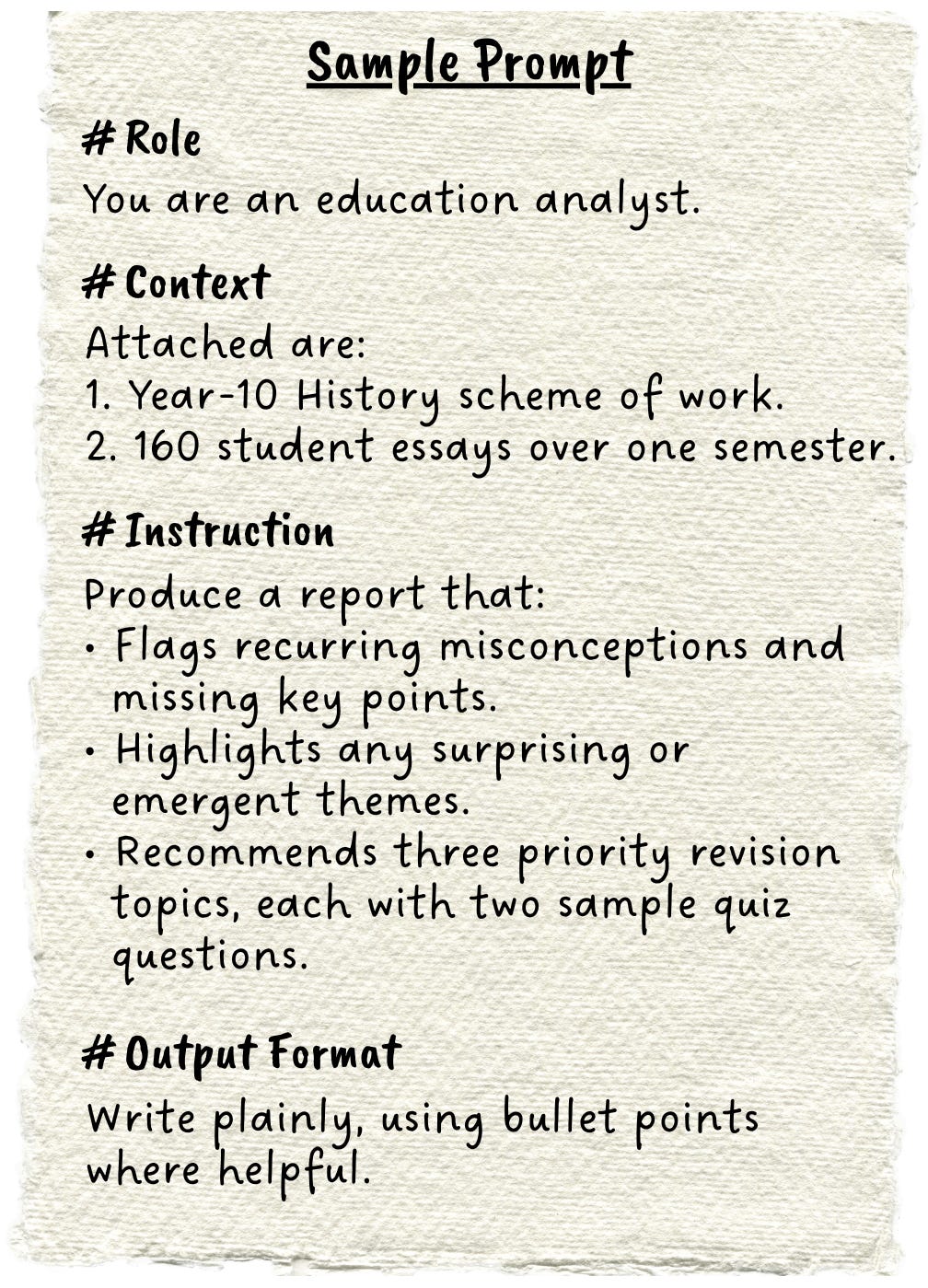
Sadly, when you upload those essays to ChatGPT, it either refuses, truncates half the text, or forgets your instructions halfway through. The culprit is not your prompt, it is the model’s context window.
Think of the context window as the whiteboard in the model’s head. Everything you typed, plus everything it has written, must fit on that board for it to think. When the board is full, earlier lines get wiped and coherence slips. Context is measured in tokens (1 token ≈ 0.75 English words) and free chatbots are usually limited to 4-8K tokens context (~3K-6K words), while paid ones support more:
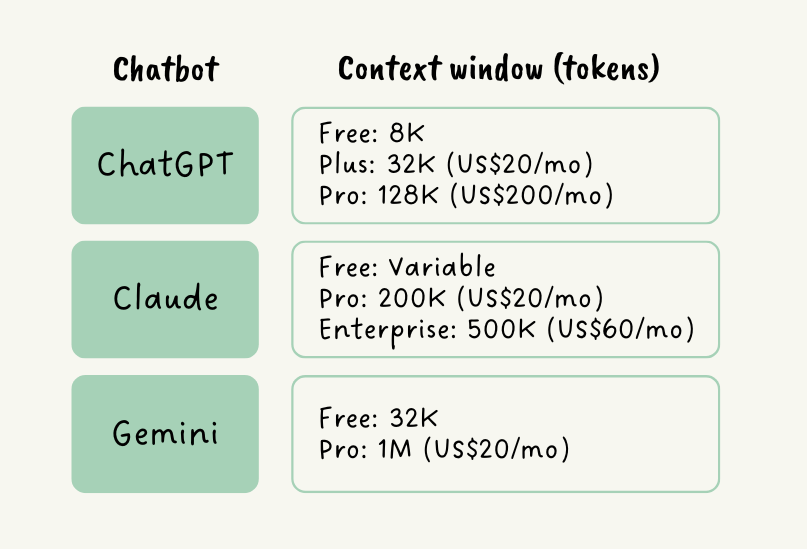
Your 100,000-word corpus weighs in at over 130,000 tokens, and that’s before you ask the AI questions about your students’ performance. Adding in variables like prompt quality and model intelligence, one use case that worked great for one teacher could completely fall apart for another. Improving teachers’ AI literacy is surely the first step towards addressing these frustrations, as is developing school-centric tools that abstract away these technical requirements so that teachers don’t have to worry about these details in the first place.
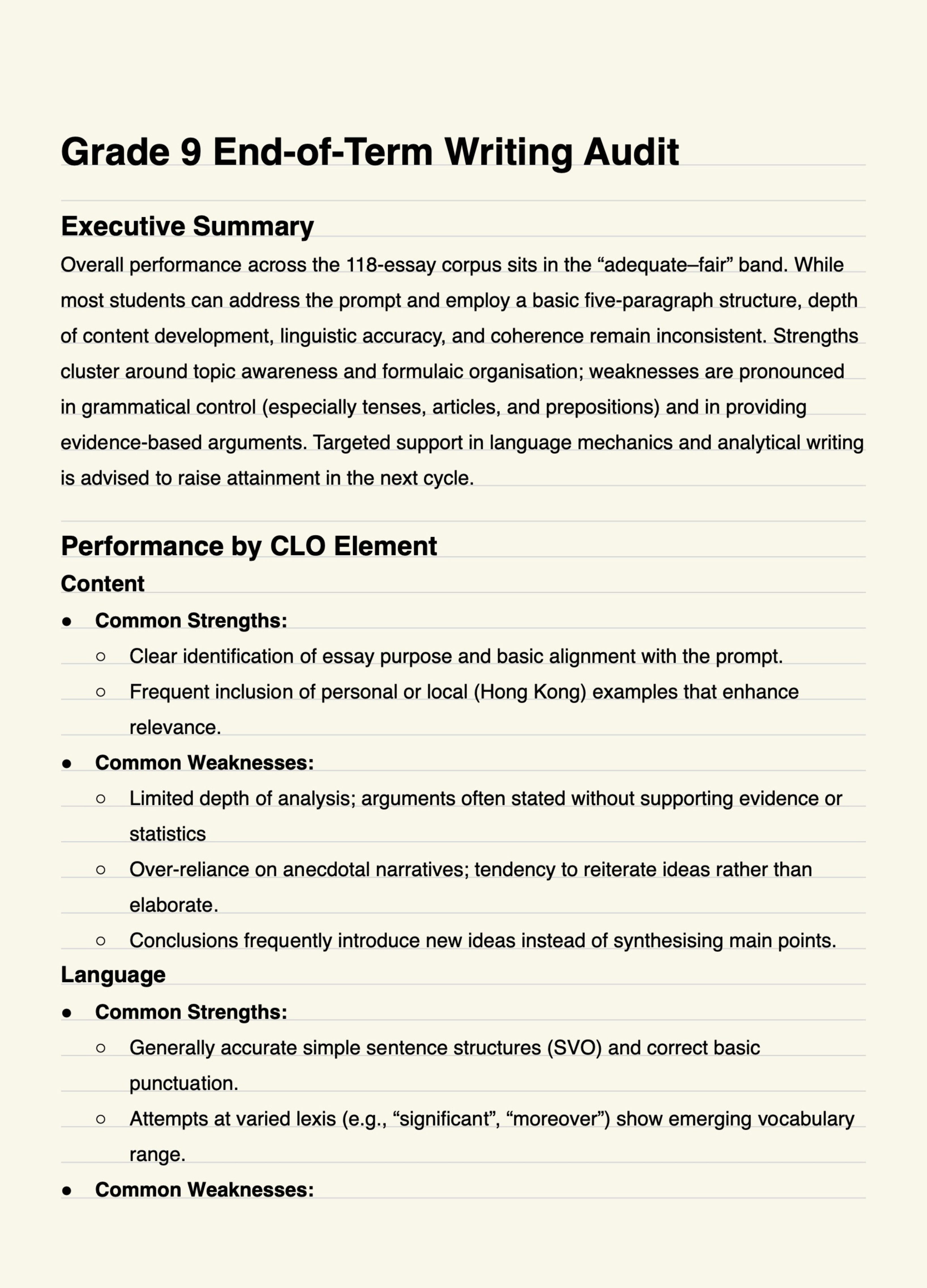
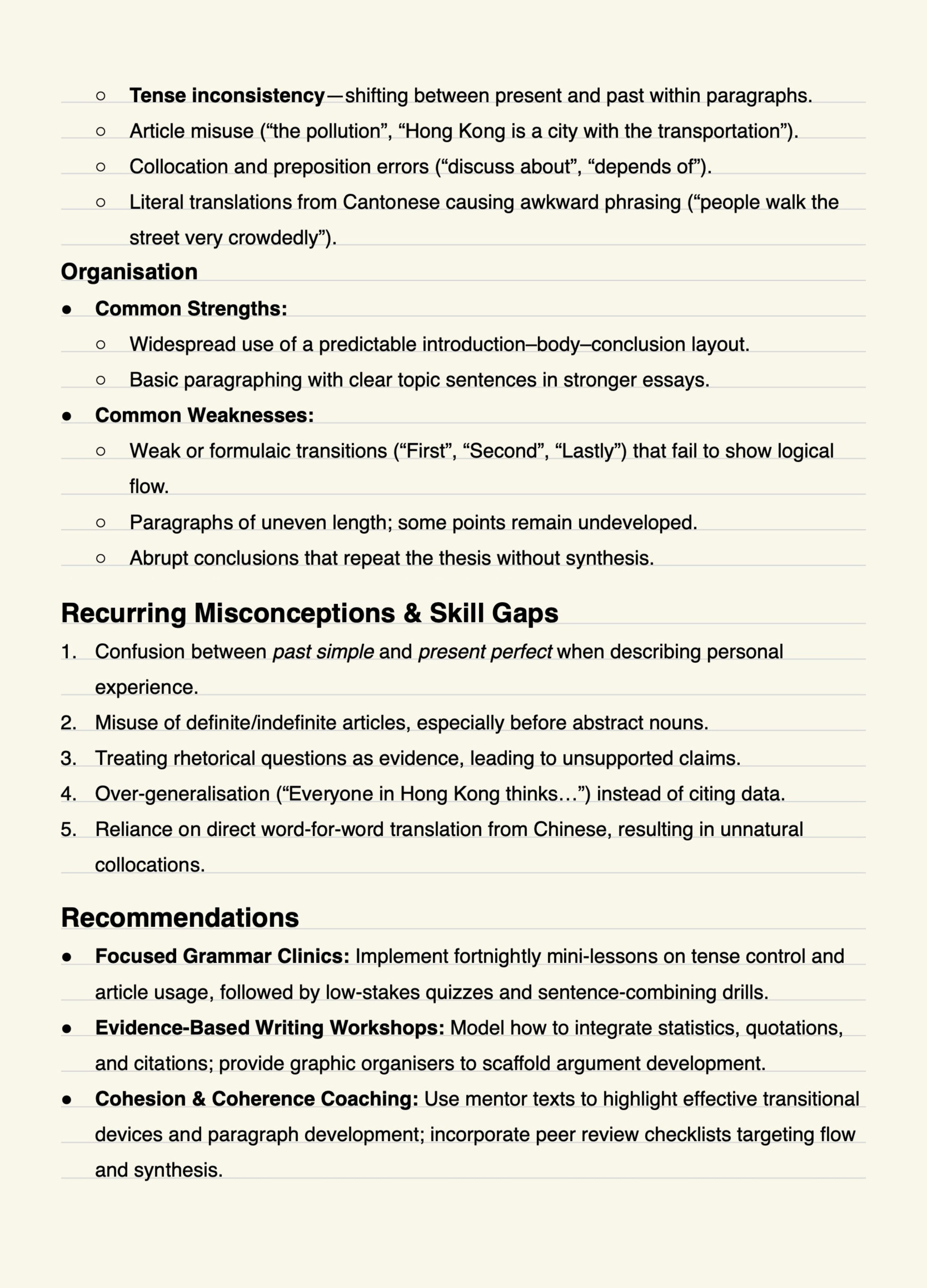
Here’s a report and prompt I used to analyse essays from an ESL class, and I instructed the AI to format the analysis based on the Content-Language-Organisation framework as used in the Hong Kong Diploma of Secondary Education (HKDSE). The English teachers I worked with told me that they are looking forward to automating a lot of repetitive paperwork and reporting with similar approaches, although the OCR technology needed to digitise students’ handwritten work isn't reliable enough yet.
Prompt Used
**ROLE & EXPERTISE**
You are an expert English-language writing assessor with experience in Grade 9/Year 10 writing evaluation, corpus analysis, and audit reporting for schools.
**TASK OVERVIEW**
Analyse the attached set of Grade 9 student essays and generate a markdown report summarising overall student performance, strengths, and weaknesses using the Content–Language–Organisation (CLO) framework for the school's end-of-term audit.
** INSTRUCTIONS**
1. Read the full corpus of essays.
2. For each CLO element (Content, Language, Organisation):
- Summarise the average performance across all essays.
- Identify the most common strengths (with illustrative examples).
- Identify the most common weaknesses and recurring issues.
3. Quantify score distribution across the CLO rubric (1 = Poor, 2 = Fair, 3 = Adequate, 4 = Good, 5 = Excellent) for each element.
4. Extract 5 representative misconceptions or skill gaps that emerged most frequently.
5. Recommend 2–3 actionable curriculum adjustments or teaching interventions based on your findings.
6. Write in formal, audit-style English, suitable for school leaders or curriculum heads.
**STYLE & TONE GUIDELINES**
- Use clear, objective, and precise academic language.
- Focus on aggregate findings, not individual student data.
- Be concise, but ensure insights are actionable and evidence-based.
**OUTPUT FORMAT**
Respond in chat using the following markdown structure:
```
# Grade 9 End-of-Term Writing Audit
## Executive Summary
(A 3–4 sentence overview of overall performance.)
## Performance by CLO Element
### Content
* **Common Strengths:**
* ...
* **Common Weaknesses:**
* ...
### Language
* **Common Strengths:**
* ...
* **Common Weaknesses:**
* ...
### Organisation
* **Common Strengths:**
* ...
* **Common Weaknesses:**
* ...
## Recurring Misconceptions & Skill Gaps
1. ...
2. ...
3. ...
## Recommendations
* ...
* ...
**CONSTRAINTS**
- Max report length: 1,200 words.
- No student names, IDs, or verbatim excerpts.
- All findings must be evidence-based and linked to the rubric.

 | A guest post by
|